Before the Camera Rolls: The Intense, Intentional Work Renuka Singh Puts Into Every Character
There's a moment in every great performance where you forget you're watching an actor. The character just is. For fans of Renuka Singh, that feeling is pretty familiar — she has a way of inhabiting roles that makes them feel lived-in, specific, and completely real. But what most people don't see is the mountain of work that happens before a single frame is shot.
So what actually goes into building one of her characters? Turns out, quite a lot.
It Starts Long Before the First Rehearsal
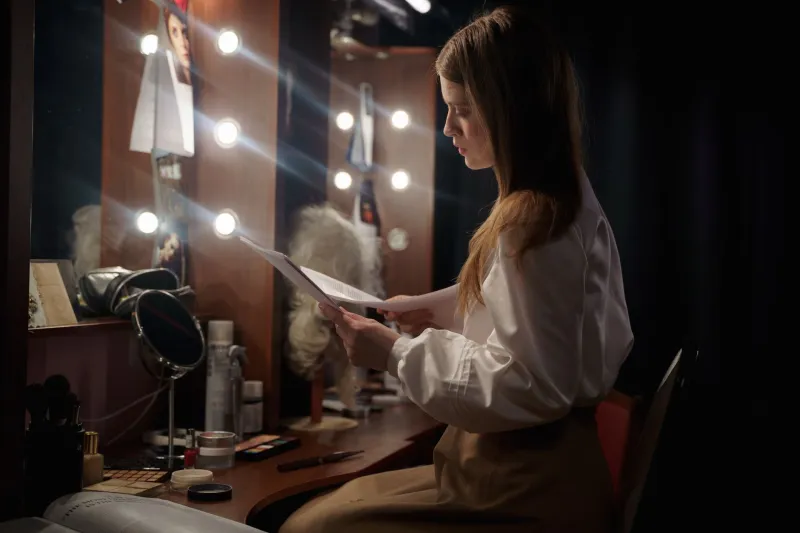
For Renuka, the work begins the moment a script lands in her hands — and not just a casual read-through, either. She treats the first pass like a kind of excavation, marking moments that feel emotionally alive, flagging lines that need context, and asking questions the script hasn't answered yet. Who was this person before page one? What do they want that they'd never say out loud? What are they afraid of?
This kind of deep textual analysis might sound more like a college lit seminar than an acting prep session, but it's a cornerstone of how she approaches complex material. The goal isn't to memorize lines — it's to understand the why behind every single one of them.
And when a role requires her to work in a language that isn't her first? That layer of preparation gets even more intense. Renuka has spoken about the additional responsibility of performing authentically in multiple languages — not just getting the pronunciation right, but understanding the cultural subtext that shapes how a character expresses themselves. It's the kind of commitment that doesn't go unnoticed on screen.
Character Immersion: Going All the Way In
Once she's got the intellectual groundwork laid, Renuka shifts into something more experiential. Depending on the role, this might mean spending time in spaces her character would inhabit, picking up physical habits or mannerisms, or even adjusting the way she moves through her daily life. It's not about becoming someone else entirely — it's about finding the emotional truth that makes a character feel three-dimensional.
For roles that carry significant emotional weight, she's talked about the importance of sitting with discomfort rather than rushing past it. American audiences who've followed method-influenced performers like Meryl Streep or Viola Davis might recognize this instinct — the idea that you can't fake certain emotional states, you have to genuinely access them. Renuka seems to operate from a similar philosophy, even if her specific approach is entirely her own.
There's also a physical dimension to her prep that often gets overlooked. Movement, posture, the way a character holds tension in their body — these aren't afterthoughts for her. They're part of the character's architecture.
The Director Relationship: A Real Creative Partnership
One thing that consistently comes through when you look at Renuka's career trajectory is how seriously she takes the collaborative side of filmmaking. She doesn't treat directors as authority figures to simply take instructions from — she approaches those relationships as genuine creative partnerships.
That means showing up to early conversations with ideas, questions, and sometimes pushback. It means being willing to try something a director suggests even if it feels counterintuitive, while also advocating for the character's logic when something doesn't add up. The best performances, she seems to understand, come out of that kind of dialogue — not from one person having all the answers.
This collaborative instinct also extends to her scene partners. Renuka is known for being fully present during rehearsals in a way that makes the actors around her feel genuinely responded to rather than just performed at. That quality — real listening — is rarer than it sounds, and it's a big part of why her scenes tend to crackle with authentic energy.
Managing the Emotional Aftermath
Here's something the industry doesn't always talk about openly: playing demanding roles takes a toll, and knowing how to decompress afterward is just as important as knowing how to immerse yourself in the first place. For Renuka, this is a part of the process she takes seriously.
After wrapping particularly intense projects, she's been deliberate about creating space to return to herself — reconnecting with routines, people, and activities that are just hers, not the character's. It's a kind of mental hygiene that keeps her sustainable as a performer, and it reflects a maturity about the craft that you don't always see in actors earlier in their careers.
This balance — going deep enough to do the work without losing yourself in it — is genuinely one of the harder skills to develop, and it's something she's clearly put real thought into.
Why the Process Shows Up on Screen
You can usually tell when an actor has done the work versus when they're coasting on instinct alone. The difference shows up in the small moments — the micro-expressions, the pauses, the way a character's history seems to live just beneath the surface of every scene. With Renuka, those details are consistently there.
For fans watching from the US, where audiences have grown increasingly sophisticated about performance craft (partly thanks to the streaming era opening up global cinema), this level of intentionality resonates. It's the same quality that draws people to actors like Cate Blanchett or Deepika Padukone — the sense that there's always more going on than what's immediately visible.
Renuka Singh brings that same depth to her work, and the preparation behind it is a huge reason why.
The Takeaway
Great performances don't happen by accident, and Renuka's track record across different genres, industries, and languages makes that point pretty clearly. Her process — rigorous, emotionally honest, and genuinely collaborative — is the engine behind the kind of work that stays with you long after the credits roll.
For fans who've ever wondered what separates a good performance from a truly unforgettable one, watching how Renuka Singh approaches her craft is about as clear an answer as you're going to get. The magic, it turns out, is mostly method.